

What They Said in Public, and What I Heard in Private: A Lesson on Public Land in Ann Arbor
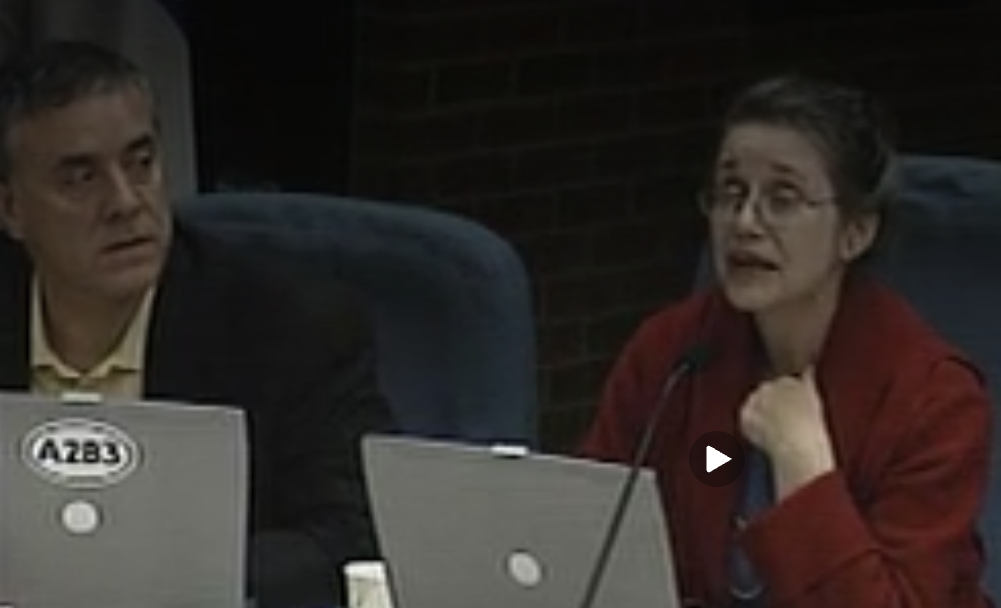
When Ann Arbor’s leaders talk about selling public land today, I listen with a particular kind of memory. I served on Ann Arbor City Council representing the First Ward from 2006 to 2008, and I lived through an earlier version of the same fight — the one over the Huron Hills Golf Course. The arguments then sound a great deal like the arguments now. So do the gaps between what gets said at the council table and what gets discussed when the cameras are off.
I want to tell that story plainly, because I think it matters for the debate Ann Arbor is having right now.
“When someone in power tells you they would never sell the public’s land, watch what happens in the rooms where they think no one is listening.”
The public position
On council, the line was reassuring. Leigh Greden, among others, said publicly that the city would never sell its parkland. That was the message residents heard in open session, and it was the message that was supposed to put worried neighbors at ease.
I came away from a private meeting with a very different impression.
What I heard in the room
The city had hired a consultant to study what should be done with Huron Hills. I went to a meeting with that consultant. We were waiting for Councilmember Bob Johnson to arrive, and to pass the time I talked about what I actually did for a living.
I told the consultant that, unlike some other people on council who had real estate connections, the way I voted had nothing to do with my business. My business was technology, not property. I was building a new platform for independent labels and musicians to deliver not just MP3 files but the metadata around them — album and cover art, liner notes, and the records of who owned the recording rights and the publishing rights — into digital stores like Apple iTunes, Amazon MP3, Rhapsody, and others. We had previously written the underlying engine in Ruby on Rails for TuneCore.
Then the conversation turned, and the consultant told me something that has stayed with me ever since: that Mike Finley had a buyer in hand for the Huron Hills Golf Course — someone who wanted to build a business conference center on the site.
I want to be careful here. This is my recollection of a private conversation. But I am recounting it honestly, because it stands in such sharp contrast to the public promise that parkland would never be sold. If a buyer was already being discussed for a public golf course while the official position was that no such thing would ever happen, then residents were not getting the full picture.
Why my own situation matters to the story
I told the consultant my vote had nothing to do with my business, and I meant it. But it is worth explaining why that statement carried weight — because my business and the people circling these decisions were closer than anyone might have guessed.
TuneCore had begun negotiations to purchase an equity position in my company, LoudFeed Inc. Any investment I received from them was set to be matched by the Michigan seed-capital fund — and Mike Finley was one of the key decision-makers at that fund. Had the deal gone through, it would have implied a valuation of around $4 million for what we had built.
In other words, a person whose name surfaced in connection with a potential Huron Hills sale was also positioned to influence funding that bore directly on my own company’s value. I could have stayed quiet about that overlap. Instead I said out loud, in that room, that none of it would touch how I voted. I still believe that distinction — between people who keep their public duties separate from their private interests and people who do not — is the whole ballgame in fights over public land.
How it fell apart
The deal that would have valued my company never closed, and the reasons are their own small parable about strategic versus purely financial motives.
TuneCore’s president, Jeff Price, and I had originally shared a vision: building a new middle class of musicians, people who could quit their day jobs — the proverbial job at Smoothie King — and make a living from their work. TuneCore’s early backer was Guitar Center, and for Guitar Center this was a strategic investment. A thriving new class of working musicians meant more people buying instruments. The incentives lined up with the mission.
Then, in 2008, Bain Capital — the private equity firm co-founded and previously led by Mitt Romney — became an investor in TuneCore. Bain’s stake was strictly financial, not strategic. It was about returns, not about selling more guitars to more musicians.
That September, the stock market crashed. TuneCore’s investors told Jeff Price that the software they had wanted to acquire from us — to speed their growth — was no longer necessary; their own engineers could rebuild what we had created within six months. Between the crash and the shift from a strategic backer to a purely financial one, Jeff backed out. The valuation evaporated.
From a golf course to Zuccotti Park
I don’t tell that part out of bitterness. I tell it because the whole experience — watching a mission-driven idea get swallowed by purely financial calculation, watching public assurances diverge from private dealings — shaped what I did next. When my wife and I became developers number one and number two for the website that helped organize roughly 9,000 people into about 100 working groups for Occupy Wall Street, we were carrying that lesson with us. Occupy was, at its heart, an argument about who decisions are really for: the public, or the people positioned to profit.
The same debate, all over again
Which brings us back to Ann Arbor today.
The city is once again deciding how much of its public land should pass into private hands. The clearest example is the Library Lot downtown — the parcel voters designated in 2018 to become an urban park and civic commons. In 2025, the mayor and council put two measures on a low-turnout summer ballot to repeal that park requirement and authorize selling the land to the Ann Arbor District Library, and in 2026 the sale of the air rights was finalized. The downtown library parcel next door was rezoned from Public Land to Downtown Core so it, too, could be held in private ownership for private development. City-owned lots like the Kline’s lot and 415 West Washington have been steered toward private developers as the route to building housing. I never took a public position on the 2025 ballot. Instead I met with the library director, Eli Neiburger and we discussed how rooms in the new construction on the library lot were promised to the library. We talked about meeting rooms for library patrons and coworker spaces. I will continue to coordinate with Eli to make this a success.
The official framing today is that selling public land is how you solve real problems — a housing shortage, a budget gap, an underused parcel. That may sometimes be true. But it was also the framing back when the answer to a golf course’s deficits was a quiet conversation about a conference-center buyer, even as the public was told parkland would never be sold.
Here is the throughline, from Huron Hills to the Library Lot. Public land is held in trust. Once it is sold, the public loses control over it permanently — and revenue, as one Huron Hills neighbor put it years ago, was never the purpose of parkland. The decisions that transfer it tend to be made in rooms most residents never see, justified by language most residents are inclined to trust.
The Huron Hills course is still a public golf course today. It survived because neighbors paid attention, organized, and in 2008 passed a charter amendment — by an 81 percent margin — requiring a public vote before parkland could be sold. They didn’t take the public assurances on faith. They built a lock on the door.
That, in the end, is the lesson I carried out of that consultant’s meeting and have never set down. When someone in power tells you they would never sell the public’s land, watch what happens in the rooms where they think no one is listening. And if you care about keeping public land public — in Ann Arbor or anywhere — don’t rely on a promise. Rely on a vote you control.
Ron “DrRon” Suarez served on the Ann Arbor City Council from 2006 to 2008. The account of the private meeting described above reflects his own recollection of that conversation.
